
Anchoring America's Financial Future
From LIBOR's Lies to SOFR's Truth

For decades, the financial world was tethered to LIBOR, a rate that was as shaky as a three-legged table. Banks were guessing their borrowing costs, and those guesses became the benchmark for trillions of dollars in loans, mortgages, and derivatives. We all know how that story ended—with scandal and manipulation that made a mockery of the global financial system.
But in the spring of 2018, the New York Federal Reserve rolled out SOFR (Secured Overnight Financing Rate), a rate based on actual transactions in the overnight repo market. Unlike LIBOR, SOFR isn't a number pulled out of thin air. It’s grounded in the real world, reflecting the cost of borrowing cash secured by Treasury securities.
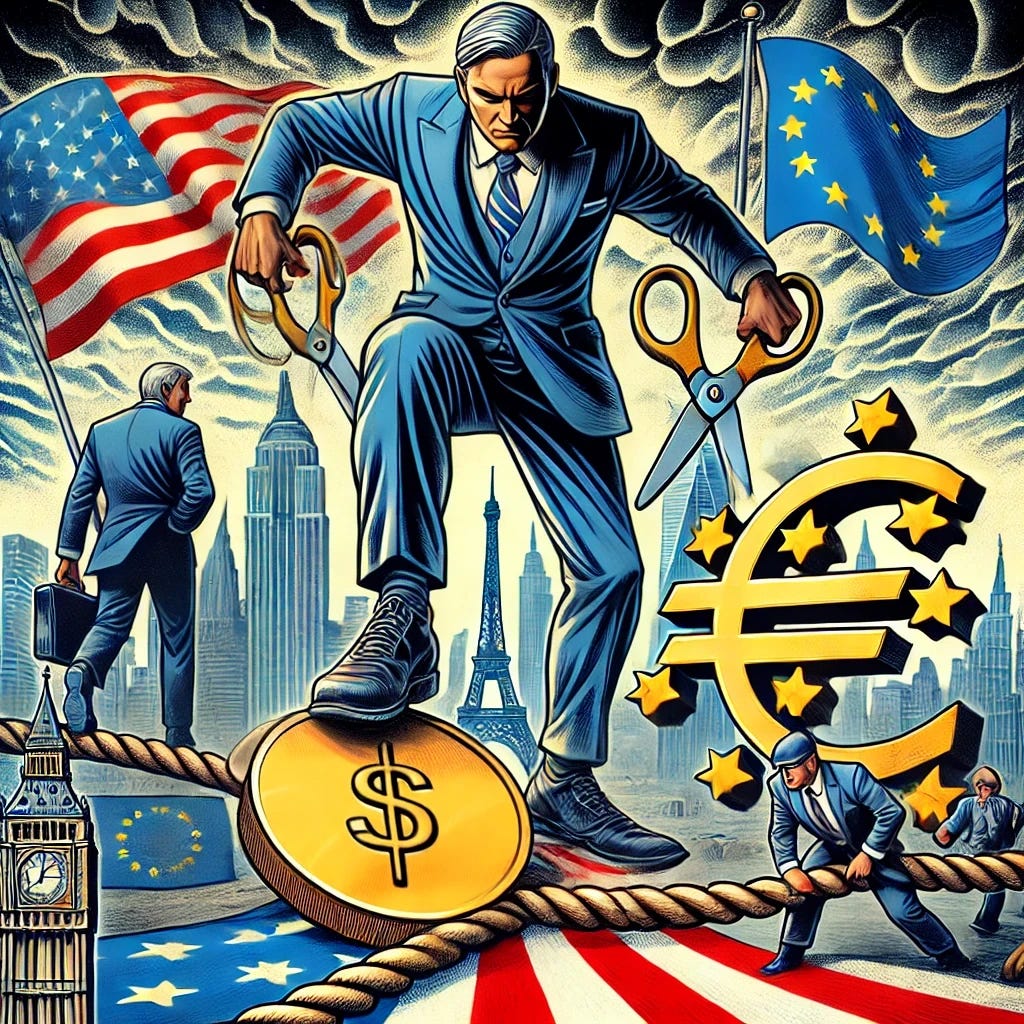
Here’s why this matters: when you’re standing on solid ground, you can weather any storm. And storms are brewing across the Atlantic. European markets are a jittery lot these days, dealing with political upheavals, financial uncertainties, and regulatory clampdowns. The U.S., with SOFR as its anchor, is positioned to sail smoothly through these choppy waters.
SOFR is the antithesis of LIBOR’s shadowy past. It’s transparent, based on real transactions, and immune to the kind of manipulation that turned LIBOR into a four-letter word. The banks can't fudge the numbers here; SOFR tells it like it is, day in and day out.
In September 2024, BGC Partners, Inc. will launch the FMX futures exchange, where SOFR futures will begin trading. This isn't just another financial product; it’s a game-changer. It will provide traders with the tools they need to hedge risk and manage exposure, all based on a rate that actually reflects market conditions. It’s like moving from a rickety wooden raft to a steel-hulled ship.
The equity ownership breakdown of FMX reads like a who’s who of finance: BGC Partners, Bank of America, Barclays, Citadel Securities, Citigroup, Goldman Sachs, JPMorgan Chase, and Jump Trading. These aren’t small-time players; they’re the titans of the financial world, throwing their weight behind SOFR and the FMX futures exchange. It’s a vote of confidence that echoes through Wall Street.
So, what’s in it for the U.S. capital markets? Stability and transparency, for starters. SOFR, rooted in the vast and liquid Treasury repo market, offers a benchmark that’s as solid as they come. It restores market confidence and reduces the risk of the kind of manipulation that plagued LIBOR. When traders and investors know they can trust the numbers, they can make better decisions, leading to a healthier financial system overall.
Moreover, the introduction of SOFR futures will solidify SOFR’s role in the financial markets. It’s not just about having a new benchmark; it’s about integrating it into the very fabric of the market. Futures, derivatives, loans—everything will start to align with SOFR, creating a unified, transparent, and reliable financial ecosystem.
The benefits over LIBOR are crystal clear. SOFR is transaction-based, reflecting real market conditions. It reduces manipulation risk because it’s based on high-volume transactions that are hard to game. It has regulatory backing, ensuring a smooth transition from LIBOR. And with the creation of futures and other financial instruments tied to SOFR, the market will have the tools it needs to manage risk effectively.
Looking forward, the transition to SOFR is crucial for the stability and efficiency of U.S. capital markets. As more financial products and contracts shift from LIBOR to SOFR, the market will benefit from enhanced transparency, reduced risk of manipulation, and a benchmark that accurately reflects current conditions. The availability of SOFR futures and other derivatives will also provide essential tools for hedging and managing interest rate risk, supporting a stable and robust financial system. SOFR stands as a beacon of stability. It’s the rate we can trust, the benchmark that tells it like it is. And as Europe grapples with its own financial woes, the U.S., anchored by SOFR, is ready to face whatever comes our way.
References
Alternative Reference Rates Committee. (2019). SOFR: A comprehensive guide. Retrieved from https://www.newyorkfed.org/arrc/sofr-transition
BGC Partners, Inc. (2024). Launch of FMX futures exchange. Retrieved from https://www.bgcg.com/wp-content/uploads/2024/01/BGCGroupAnnouncesCFTCApprovalforFMXFuturesExchange-vF.pdf
Bloomberg. (2024). Futures exchanges are for traders. Retrieved from https://www.bloomberg.com/opinion/articles/2024-04-25/futures-exchanges-are-for-traders?utm_source=website&utm_medium=share&utm_campaign=copy
Federal Reserve Bank of New York. (2018). Secured overnight financing rate data. Retrieved from https://www.newyorkfed.org/markets/reference-rates/sofr
Financial Conduct Authority. (2021). Future cessation and loss of representativeness of the LIBOR benchmarks. Retrieved from https://www.fca.org.uk/news/press-releases/announcements-end-libor
Financial Stability Board. (2019). Reforming major interest rate benchmarks. Retrieved from https://www.fsb.org/work-of-the-fsb/policy-development/reforming-major-interest-rate-benchmarks/
Financial Stability Oversight Council. (2019). 2019 annual report. Retrieved from https://home.treasury.gov/policy-issues/financial-markets-financial-institutions-and-fiscal-service/fsoc/annual-reports
ICE Benchmark Administration. (2020). Consultation on potential cessation of LIBOR. Retrieved from https://www.theice.com/iba/libor